
Healthy Gulf Food: The Plate Method for Kabsa and Mandi, Nothing Banned
You do not have to give up kabsa or mandi to eat in balance. Half the plate vegetables, a quarter protein, a quarter starch, with a hand measure and a guide to Gulf dishes.
By Eslam Abdelrahman7 min read

In this article
- In short
- The plate method: just three areas
- The hand measure: a scale you never forget
- Healthy Gulf food, dish by dish
- Dates and Arabic coffee
- Karak and other drinks
- Try this tonight
- Frequently asked questions
- Can I eat kabsa when I want to lose weight?
- Should I give up rice and bread?
- How do I handle restaurants and family feasts?
- Before you change how you eat: when to talk to a doctor
- The plate, in a book
- Sources
What scares most people who want a balanced diet is the idea of saying goodbye to their own table: kabsa on Friday, mandi at a family feast, harees in Ramadan, dates with coffee. The truth is simpler and kinder: healthy Gulf food does not mean giving up any dish from our kitchen. What changes is how the plate is arranged and how much is on it, not what you love.
In short#
- Divide your plate: half vegetables, a quarter protein, a quarter starch.
- When there is no plate and no scale, use your hand: a fist for starch, a palm for protein, a thumb for fats.
- Every Gulf dish fits this method in a measured portion, none of them by being banned.
- Start with drinks: it is the easiest change and the one with the biggest effect.
The plate method: just three areas#
Picture your plate as a circle and divide it like this:
- Half: vegetables. Salad, cooked or grilled vegetables, or a vegetable soup on the side.
- A quarter: protein. Skinless chicken, fish, lean meat, eggs or legumes.
- A quarter: starch. Rice, bread, bulgur, jareesh or potatoes.
Beside the plate: a glass of water, and a serving of low-fat dairy or a piece of fruit.
This split is close to the Saudi Healthy Plate issued by the Saudi Food and Drug Authority and to the Healthy Food Palm issued by the Saudi Ministry of Health. Both rest on variety across food groups and moderation in quantity.

There is a small trick in the order too: put the vegetables on first, then the protein, then the starch in the space that is left. If you start with the rice, there is no room left for anything else.
The hand measure: a scale you never forget#
Nobody carries a scale to a feast. Your hand is always with you, and its size scales with your body:
| What you measure with | The portion | Examples |
|---|---|---|
| A closed fist | Starch | Rice, jareesh, pasta, potatoes |
| A palm without fingers | Protein | Chicken, fish, meat, kofta |
| Two cupped hands | Vegetables | Salad, cooked vegetables |
| A thumb | Fats | Oil, tahini, butter, nuts |
For a main meal that usually means one fist of starch, one palm of protein, two handfuls of vegetables and a thumb of fat for a woman, and two fists of starch and two palms of protein for a man. This is a starting point and a common practical estimate, not a laboratory measurement. Adjust it by how you feel: if you are very hungry, add more vegetables and protein.

Healthy Gulf food, dish by dish#
We deliberately give no calorie figures for Gulf dishes: cooking method and the amount of ghee vary from home to home and restaurant to restaurant, while the hand measure works whatever the recipe. Here is how to eat the familiar dishes:
| Dish | How to eat it |
|---|---|
| Kabsa, mandi and machboos | A fist of rice (two for a man), a palm-sized piece of skinless meat or chicken, and half the plate as salad, daqqus (tomato sauce) and vegetables |
| Harees and jareesh | One cup as the starch and protein together, with a large plate of salad, and little ghee on top |
| Thareed and marqooq | Plenty of broth, vegetables and meat, and soaked bread to about one fist |
| Fried fish | Grilled or oven-baked most of the time, with fried kept for occasions |
| Samboosa and luqaimat | Two pieces, not a plate, and baked or air-fried if you make them at home |
| Sweet dishes such as masoub, areeka and khabeesa | Rich dishes: a small portion shared, not a whole meal |
| Shawarma and grills | Grills are among the best restaurant choices. Shawarma in one wrap, lots of vegetables, no heavy sauces |
At a feast, where the rice and meat sit on one tray in front of everyone, you do not need to apologise. Take your own plate first, put on the salad, then the meat, then the rice, and eat slowly. Whatever is left on the tray will not go to waste.

Dates and Arabic coffee#
Dates are part of our day and our hospitality, and they are not the enemy of any plan. But they are fruit with concentrated sugar, so they count. A practical suggestion: three dates with a small cup of coffee, counted as your snack rather than something extra. Put the three dates on a small plate and move the box out of reach. Arabic coffee without sugar adds no calories worth mentioning. If you have diabetes, ask your doctor how many dates suit you.
Karak and other drinks#
Start here, because drinks are the easiest to change and have the biggest effect. Water is your first drink: a glass when you wake and one before each meal. For karak and milk tea, halve the sugar and then drop it, and use low-fat milk. Juice is a small glass with a meal, not between meals, and whole fruit is better because its fibre stays. As for soft drinks and energy drinks, we suggest making them rare.
Try this tonight#
You do not need a long plan to begin. At your next meal try just three steps: drink a glass of water before you sit down, put the salad or vegetables on your plate first, then make the rice about the size of your fist. If the food is cooked at home, use less ghee on top and choose the oven over frying. These steps do not change your table, but they change what reaches your plate, and that is the point.
Frequently asked questions#
Can I eat kabsa when I want to lose weight?#
Yes. No single food makes you gain weight and no single food makes you lose it: what decides is the total of what you eat over the days. Kabsa with a fist of rice, a palm of meat and half a plate of salad is a balanced meal. What gets in the way is not the kabsa but the plate piled twice.
Should I give up rice and bread?#
There is no need. Banning a food you love makes you think about it all day, and then you eat too much of it the day you slip. The answer is the portion, not the ban. More on this and other beliefs in Four Common Weight-Loss Myths.
How do I handle restaurants and family feasts?#
Choose grills, start with the salad, take one plate, and do not make up for it or punish yourself afterwards: the next meal is a normal one. To see why this approach works, read How Weight Loss Works.
Before you change how you eat: when to talk to a doctor#
This article is educational and is not a substitute for a doctor. If you are pregnant or breastfeeding, under 18, have a history of an eating disorder, have diabetes and use insulin or blood-sugar-lowering medication, have heart, kidney or liver disease, take weight-loss medication, or are at a normal or low weight, talk to your doctor before changing how you eat. And never stop a medication your doctor prescribed on your own.
The plate, in a book#
The 60-Day Weight Loss Plan has a whole chapter on the plate, the hand measure and the Gulf table, then a different meal example for each of the sixty days. This article is enough to start tonight without any book.
Sources#
- Ministry of Health, Saudi Arabia. Dietary Guidelines for Saudis: The Healthy Food Palm. 2012.
- Saudi Food and Drug Authority. The Saudi Healthy Plate. 2020.
This content is educational and not medical advice. It does not replace a doctor or another qualified professional. We do not promise any result; results differ from person to person.
Subscribe to the Khutwa newsletter
New posts and a note when a new book comes out. No spam, and you can leave in one click.
You may also like
Logging Meals and Handling Emotional Eating Without Obsessing
Writing down what you eat shows what you miss, but it can turn into an obsession. How to log without guilt, a three-step emotional-eating plan, and when to see a professional.
7 min read
How Weight Loss Works: Calorie Deficit and a Safe Pace
One rule sits behind every healthy diet: a moderate calorie deficit. Here it is in plain language, with the safe pace of loss and five habits that make it easier to keep.
7 min read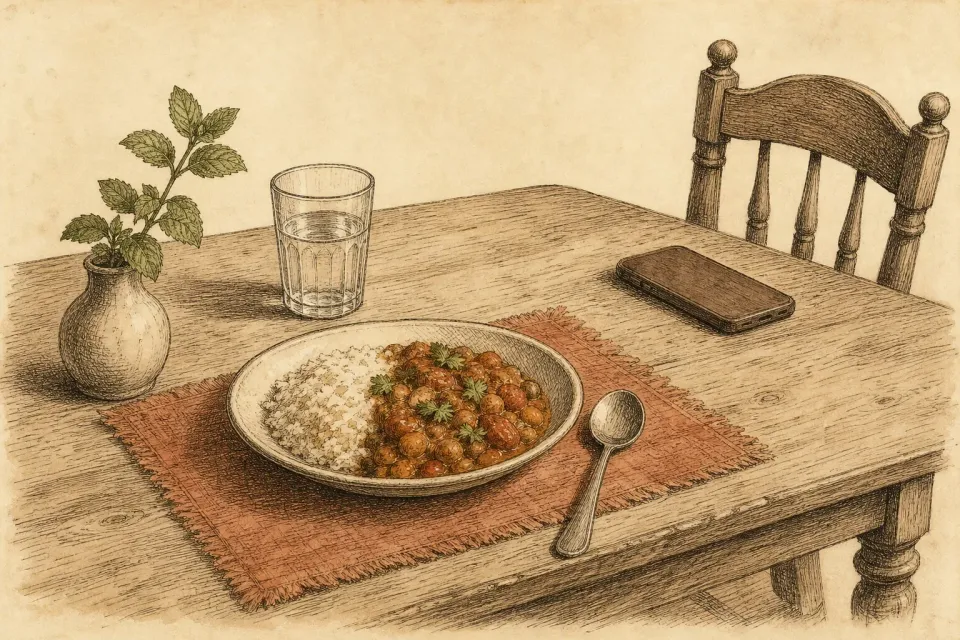
The Hunger Scale from 1 to 10: Eat With Attention and Stop at Fullness
Ask yourself before eating: how hungry am I, from 1 to 10? We explain the scale, stomach versus emotional hunger, and five habits for eating with attention and stopping at fullness.
7 min read


